CNRC Logo

NCNE was established in 2024 as part of the CNRS-L

Support & Downloads

Elevate your experience with our mobile app – Download now and stay connected effortlessly!

s f

Contact Info
59, Zahia Salmane street, Jnah
[email protected]
+961 1 856 450
Follow Us
Image Alt

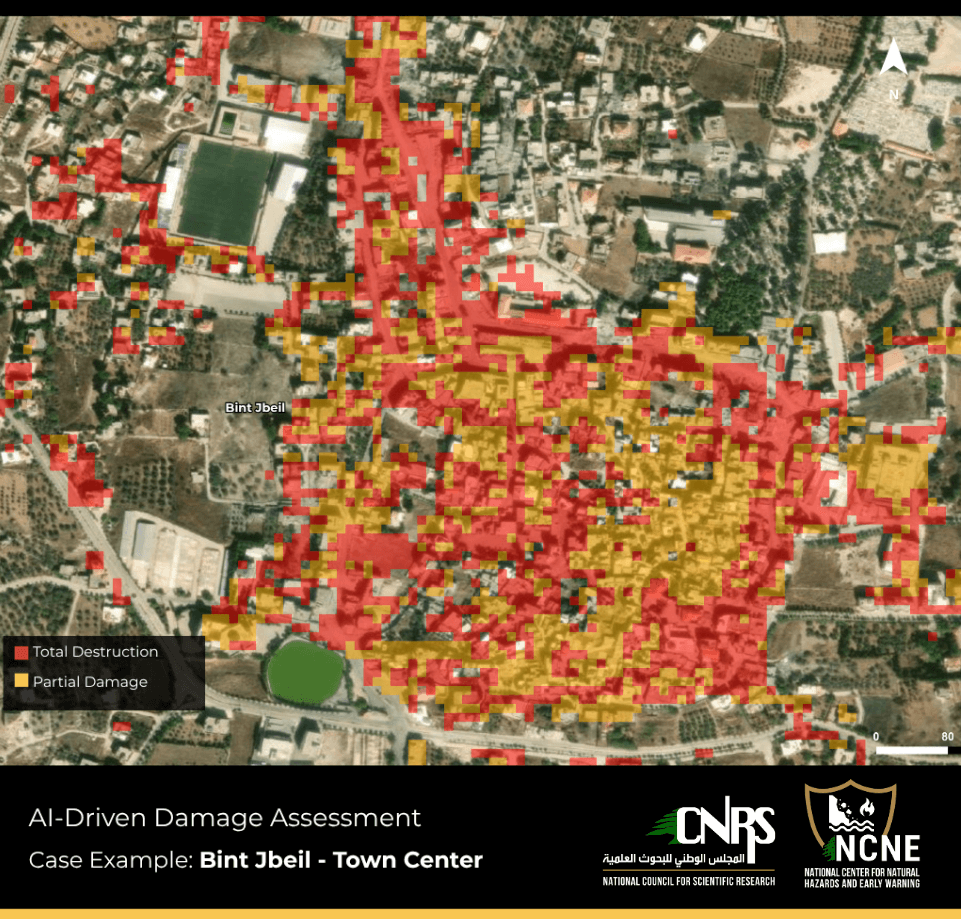
تقييم الأضرار باستخدام الذكاء الاصطناعي في بنت جبيل

تقييم الأضرار باستخدام الذكاء الاصطناعي في بنت جبيل

منذ عام 2023، يقود المجلس الوطني للبحوث العلمية – لبنان جهودًا وطنية متقدمة لرصد وتقييم أضرار الحرب، من خلال توظيف الذكاء الاصطناعي وبيانات الاستشعار عن بعد لإنتاج معلومات مكانية دقيقة وقابلة للاستخدام في الوقت المناسب

في هذا المثال من بنت جبيل، يتم دمج صور الأقمار الصناعية البصرية (بدقة 10 أمتار) مع بيانات الرادار لتقدير الأضرار ضمن المناطق العمرانية، مع تصنيف واضح لمستويات الدمار
🔴 دمار كلي
🟡 أضرار جزئية

وتُعزَّز هذه المخرجات من خلال التحقق والمعايرة باستخدام صور عالية الدقة، بما يضمن مستوى عالٍ من الموثوقية، ويدعم إنتاج بيانات متسقة قابلة للاعتماد ضمن التقييمات الوطنية للأضرار والاحتياجات

تُسهم هذه المنهجية في توفير معلومات مكانية قائمة على الأدلة، تدعم التقييمات السريعة، وتحديد الأولويات، وتوجيه سياسات التعافي وإعادة الإعمار، بما يتماشى مع أطر العمل الدولية للحد من مخاطر الكوارث وبناء القدرة على الصمود

تنويه: يعتمد التحليل على قناع عمراني مستند إلى تصنيف
CORINE
ما يؤدي إلى استبعاد بعض فئات استخدامات الأراضي من التقديرات

How can data be translated into decisions in crisis contexts?


Since 2023, the National Council for Scientific Research – Lebanon (CNRS-L) has been leading advanced national efforts in war damage monitoring, leveraging AI and Earth Observation to generate timely, reliable, and actionable geospatial intelligence.


This example from Bint Jbeil illustrates the integration of 10 m optical imagery and SAR data to assess damage across urban areas, with clear classification of destruction levels:

🔴 Total destruction

🟡 Partial damage


These outputs are further validated and calibrated using high-resolution imagery, ensuring a high level of accuracy and consistency, and enabling their integration into national Damage and Needs Assessments (RDNA).


This approach supports the production of evidence-based spatial data to inform rapid assessments, prioritization, and recovery planning, aligning with international frameworks on disaster risk reduction and resilience building.


Disclaimer: The analysis relies on a CORINE-derived urban mask, excluding certain land-use classes from the estimates.

Skip to content