Mediterranean coastal resilience workshop advances regional dialogue on early warning, preparedness, and anticipatory action
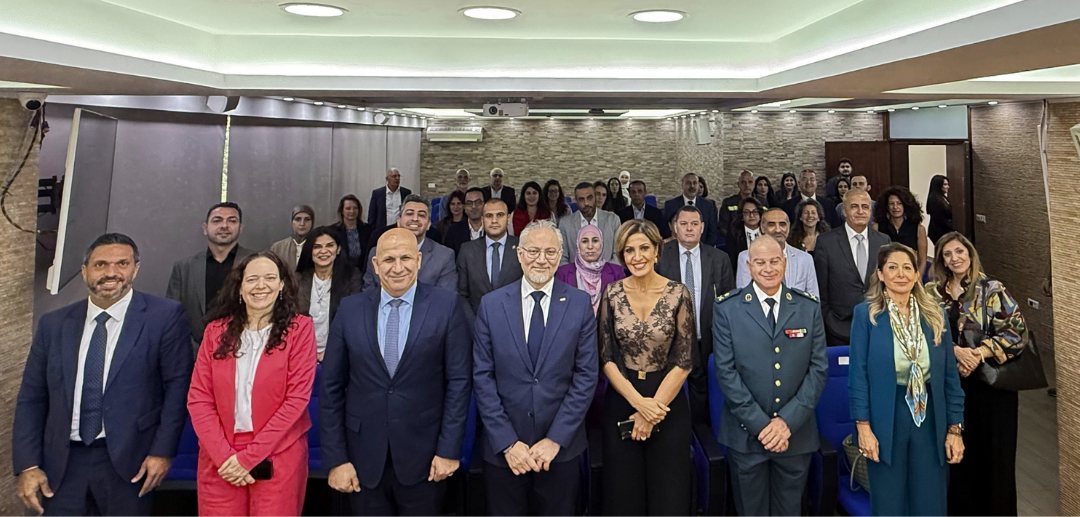
On 6 November 2026, the National Council for Scientific Research – Lebanon (CNRS-L) hosted the second day of the Regional Workshop on Coastal Resilience: From Early Warning to Anticipatory Action in the Mediterranean, organized by the United Nations Office for Disaster Risk Reduction – Regional Office for Arab States (UNDRR), in partnership with the Arab Science and Technology Advisory Group for Disaster Risk Reduction (Arab STAG) and Lebanon’s National Disaster Risk Management Unit.
The workshop brought together representatives of Mediterranean Arab Member States, Lebanese national institutions, scientific and academic institutions, civil society, and technical partners to address coastal risks and strengthen the links between risk knowledge, early warning, preparedness, and anticipatory action.
Opening Session
The opening session featured remarks by:
H.E. Dr. Tamara Elzein, Minister of Environment of Lebanon, emphasized the importance of cooperation between government institutions and their national, scientific, and technical counterparts, highlighting the need for collective efforts to address coastal risks and strengthen resilience.
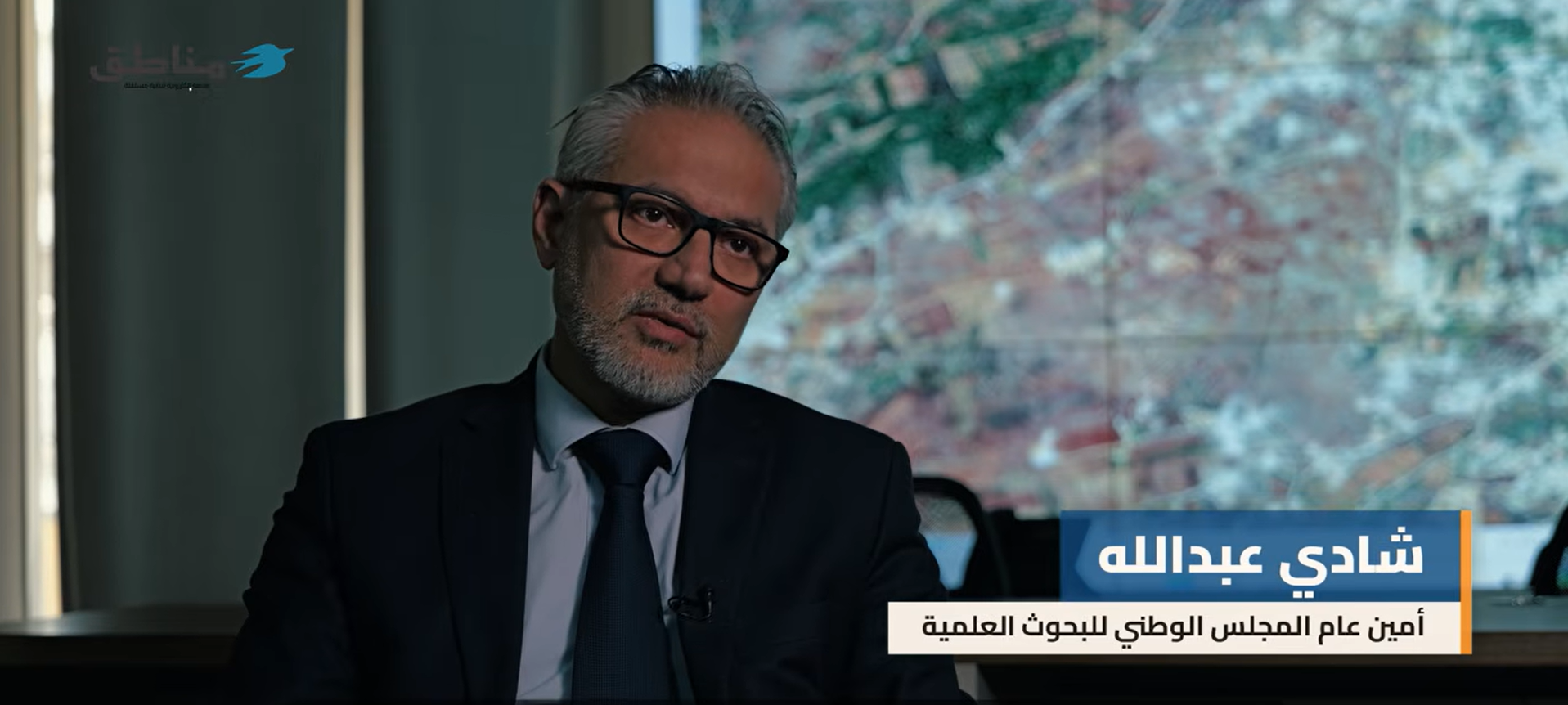
Dr. Chadi Abdallah, Secretary-General of CNRS-L, stressed the need to strengthen early warning systems and ensure that warnings reach all communities, emphasizing the importance of accessible and inclusive systems that support timely preparedness and action.
Ms. Sandra Amlang, Chief of UNDRR’s Regional Office for Arab States, underscored the urgency of translating scientific knowledge and early warning into practical measures that protect communities. She highlighted the importance of connecting early warning systems with national and local preparedness arrangements and prioritizing investments in coastal resilience.
Dr. Mustafa Al-Saadi, Head of Disaster Risk Reduction at the General Secretariat of the League of Arab States, highlighted the shared nature of coastal hazards across the Mediterranean and stressed the importance of regional cooperation, knowledge-sharing, and the exchange of experiences among Mediterranean countries to strengthen preparedness and resilience.
Mr. Zahi Chahine, Head of Lebanon’s National Disaster Risk Management Unit, highlighted the importance of viewing the challenges facing Lebanon not as obstacles, but as guidance for strengthening national preparedness and recovery capacities.
The workshop was also held in the presence of Ms. Nathalie Zaarour, Executive Board Secretary of the National Commission for Lebanese Women (NCLW), representing the First Lady and the Minister of Public Works and Transport; Brigadier General Houssam Youssef, representing the Commander of the Lebanese Armed Forces and the Minister of National Defense; Dr. Rawaa Harati, Advisor to the President of the Lebanese Republic; and Brigadier General Imad Khreish, Director General of the Lebanese Civil Defense.
Scientific Presentations: Understanding Coastal Risks and Strengthening Risk Knowledge
Two presentations explored regional coastal risks and highlighted the role of scientific knowledge in strengthening resilience.
Ms. Rania Hammad, External Relations Officer at UNDRR’s Regional Office for Arab States, delivered a presentation entitled “Setting the Regional Scene: Coastal Risk in the Mediterranean,” providing an overview of interconnected risks affecting coastal communities, infrastructure, and ecosystems, including sea-level rise, coastal flooding, tsunamis, and cascading impacts on essential services. The presentation also outlined five opportunities for regional cooperation: shared risk information, connected warning systems, local preparedness, risk-informed investment, and the exchange of technical expertise.
Dr. Rouba Ziade, Researcher at the National Center for Natural Hazards and Early Warning (NCNE) of CNRS-L, delivered a presentation entitled “Science and Risk Knowledge for Coastal Resilience,” addressing coastal hazard monitoring, remote sensing, scientific risk information, forecasting, and the links between scientific knowledge and policy decisions. The presentation highlighted existing monitoring capacities and identified gaps related to coastal observation networks, high-resolution modelling, exposure data, institutional data-sharing, and warning communication. It also examined the use of satellite imagery for flood mapping and oil-spill detection, alongside the role of risk assessments in informing coastal planning and preparedness.
The presentations highlighted the importance of combining regional cooperation and scientific expertise to improve coastal risk understanding, strengthen early warning capacities, and support informed decision-making across the Mediterranean.
Understanding a changing Mediterranean coast: From risk knowledge to early warning
The first panel, entitled “Understanding a Changing Mediterranean Coast: From Risk Knowledge to Early Warning,” explored how Mediterranean countries can better understand, monitor, and communicate evolving coastal risks. The panel was moderated by Dr. Celine Mahfouz, Research Associate at the National Center for Marine Sciences (NCMS) of CNRS-L.
The panel featured three speakers:
Mr. Ahmed Salah Zahran: Director of the Training and Awareness Department at the National Committee for Crisis Management and Disaster Risk Reduction.
Dr. Marlene Brax: Director of the National Center for Geophysics (CNG), CNRS-L.
Dr. Jacques Harb: Dean of the Faculty of Engineering at Notre Dame University-Louaize (NDU), Lebanon.
The discussion addressed the growing and interconnected coastal risks facing Mediterranean communities, including sea-level rise, coastal flooding, tsunamis, and extreme weather events. It highlighted the importance of reliable scientific information, effective monitoring systems, and cooperation between national authorities and scientific institutions in translating risk knowledge into accessible, timely, and actionable early warnings.
From warning to action: Strengthening coastal preparedness and anticipatory action
The second panel, entitled “From Warning to Action: Strengthening Coastal Preparedness and Anticipatory Action,” explored how early warnings can be translated into timely preparedness and anticipatory action to reduce the impacts of coastal hazards. The panel was moderated by Dr. Rouba Ziade, Researcher at the National Center for Natural Hazards and Early Warning (NCNE), CNRS-L.
The panel featured three speakers:
Dr. Taghreed Al-Maaytah: Director of the Environmental Protection and Sustainability Directorate at the Aqaba Special Economic Zone Authority (ASEZA), Jordan.
Brigadier General Tony Jreij, representing Brigadier General Imad Khreish, Director General of the Lebanese Civil Defense.
Mr. Kassem Chaalan: Disaster Risk Reduction Program Manager at the Lebanese Red Cross (LRC).
The discussion addressed institutional and community preparedness, early warning communication, and coordination among relevant actors to enable timely action. It highlighted the importance of effective institutional arrangements, preparedness plans, operational procedures, and community capacities in translating early warnings into coordinated anticipatory action before coastal hazards escalate into disasters.
Regional cooperation on coastal resilience
During the workshop, a regional dialogue was facilitated by Dr. Mustafa Al-Saadi, Head of Disaster Risk Reduction at the General Secretariat of the League of Arab States. The dialogue focused on the technical, institutional, and financial gaps affecting coastal risk monitoring, early warning, and anticipatory action.
The discussion examined priority areas for regional cooperation, technical assistance, scientific exchange, capacity development, and investment.
Visit to the National Center for Natural Hazards and Early Warning of CNRS-L
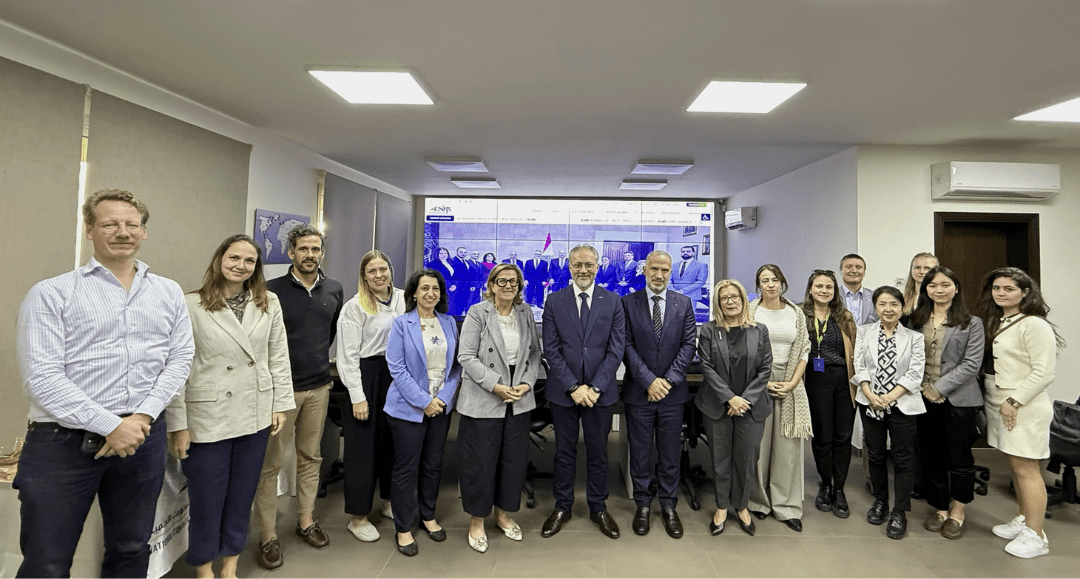
As part of the workshop programme, a delegation of regional and national representatives, including Ms. Sandra Amlang, Ms. Rania Hammad, Dr. Mustafa Al-Saadi, Dr. Taghreed Al-Maaytah, and Mr. Ahmed Salah Zahran, visited the National Center for Natural Hazards and Early Warning (NCNE) of CNRS-L. The delegation was introduced to the Center’s facilities, technologies, monitoring systems, and applications, as well as its work in natural hazard monitoring, risk assessment, and early warning in Lebanon and across the region. The visit highlighted the importance of scientific knowledge and regional cooperation in strengthening preparedness and resilience.
The photos of the workshop are available at the following link: